 |
| The BCI home system Source: http://www.wadsworth.org/ |
Friday, November 14, 2014
Typing with your mind

Friday, November 7, 2014
Are we closer to Back to the Future?
 |
| Source: Back to the Future |
 |
| Source: inventist.com |
Friday, October 10, 2014
Water that is out of this world.
 |
| Artist's rendition by David A. Aguilar, CFA |
Friday, October 3, 2014
Deadly force against rocks

The US is stockpiling nuclear weapons to prevent asteroids from hitting the Earth when the time comes. Spending time envisioning such an event, the United Nations and NASA has an increasing favor towards nuclear weapons. Stockpiling nuclear warheads, bombs, and more might seem useless to citizens, but not in the eyes of the UN. As stated in Wired.co.uk, Former NASA astronaut Ed Lu remarked that there are "100 times more asteroids lurking in space than have ever been located," and that our challenge is "to find them before they find us". A device called Sentinel Space Telescope (SST) is being created by the B612 Foundation, co-founded by Lu. A SST is a privately built infrared device allows the UN to accurately track asteroids on route to hit the Earth years ahead of time. The time estimated for the project to finish is told to be 2017.

Friday, September 26, 2014
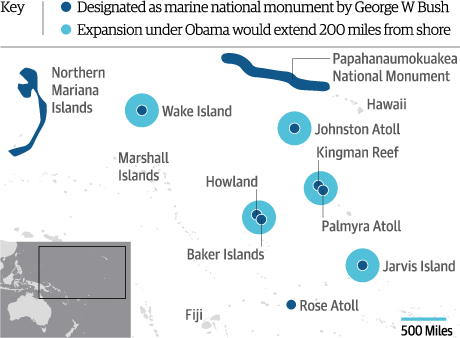
Obama creates large marine reserve
 |
| MAGGIE SMITH, NG STAFF. SOURCES: U.S. FISH AND WILDLIFE SERVICE; USGS; MARINE CONSERVATION INSTITUTE |
 |
| Pacific Ocean reserve Photograph: Guim |
Announced
last Thursday, by existing monument around U.S. controlled islands, it will be
the largest marine reserve ever. Acting quickly, for the 12th time
Obama has bypassed Congress and used the Antiquities Act for environmental
protection. It will expand the reserve while some parts are untouched. Three
times the size of California, 6 times it's original, at 490,000 square miles.
Even with the enormous amount of expansion, it is nowhere near the size
of 754,400 square miles that President Obama was hoping for. This will
take effect in January of 2015. Protecting waters near a tiny island state of
Kiribati, one of the last great tuna grounds left in the world.
Thursday, September 18, 2014
How fast can humans run?
 |
| Source: NASA |
After 40 years in the
dark, this question was finally answered. Experiments to see how fast a human
can run on the moon has taken place. Taking place on NASA's DC-9 aircraft. An
aircraft capable of reducing its internal gravity to the match the moon's while
in the swooping motion. There were eight participants, three being astronauts.
Each astronaut was asked to run for 20 seconds long in the artificial lunar
gravity.
 |
| Source: NASA |
The theoretical average
calculated by NASA was 1.8 miles per hour (2.89 km), was a dramatic difference
to the average on Earth being 4.5 miles per hour (7.24 km). After the
experiments, the results was an average of 3 miles per hour (5 km), a much
closer calculation. The theory revolving around why their theoretical
calculation is the boost created by the counter-swinging motion of the
participants' arms and legs.
Thursday, September 4, 2014
How 3D printing can change our lives.
 |
| Source: The Verge |
 |
| Source: Space.com |
The
first 3D printed object was created in 1984 by Charles W. Hull. From the
cost of $20,000 for a printer to only $1,000 in the course from 2010 to 2013
alone. Now this technology no less than 2 years has been growing in popularity
and the uses of it. As in my last blog, NASA has made a rocket injector (fuel
injector) using 3D printing. As more attention is attracted to this technology,
more of the bigger companies are buying printers and coming up with cheaper and
easier ways to innovate. As it began growing in popularity, their uses were
only for creating small objects such as cups or decorations. Since then, now
their uses range far and wide, ranging from a mere simple printed name to a
working bicycle to a working weapon. Caused by the uses and possibilities this
provides, are many risks and many dangers. The reliability and efficiency it
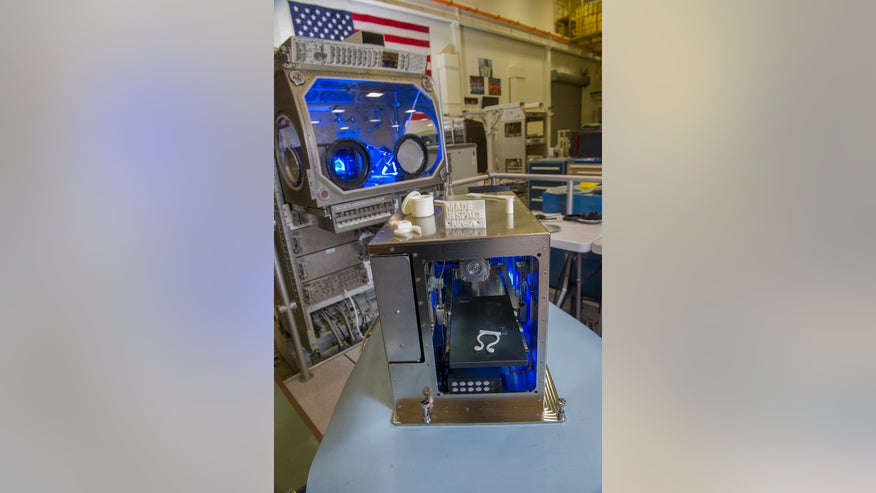
provides even NASA has uses for it. Instead of sending a space ship to give simple tools to the space station, a new one can be printed on the station. As NASA plans to send 3D printers in space
for use, a Boston hospital recently 3D printed a toddler's brain before his
actual hemispherectomy to insure success. Hemispherectomy is one of the rarest
and most challenging surgery which half of the brain is removed or disabled.
The versatility is said to boost economies and help smaller businesses.
Subscribe to:
Posts (Atom)